


This interview is with Dr Robyn Timothy, a lecturer in Sociology and Criminology at York St John University. She has a background in sociology and women’s studies, and her research focuses on how digital feminist artists experience and navigate online spaces and embodiment. This interview is all about feminism, digital culture, art, popular culture, and technology, and how it all intersects in contemporary society.
Check out her journal article : ‘‘Barbie Land as cyberfeminist utopia’’ (2024)
In one of your works, you discuss cyberfeminism and you say that the cyberspace is feminine. What is it? And what do you mean by that?
Cyberfeminism is really without clear definition but it refers to a feminist movement and approach that focuses on the internet and digital technologies. Cyberfeminist thinking emerged in the 1990s and looked at the feminist potentials in the politics of the internet. It’s a meshing of feminist activism and academic inquiry, characterised by manifestos, art, science fiction, and a real enthusiasm for the political possibilities and pleasures that the internet could provide for women. A general idea is that cyberspace can be liberating for women because it is a disembodied space, and being free from the body offers a freedom from markers of sexual difference. It’s about existing and constructing networks beyond a gender binary, so cyberspace provides an imagined space for the blurring of boundaries. Donna Haraway’s concept of the cyborg is central to this, she writes that the cyborg is a powerful political fiction which embodies the crossing of boundaries. Selves can move between physical spaces and cyberspace, and the cyborg is emblematic of the dissolution of binary logic. Through and with technology, we transgress dualisms between mind/body, human/machine. It’s about being hybrid and transgressing, which demonstrates how the binaries which structure our everyday lives are fluid and unstable – technologies can disrupt binary logic and give space to construct new ways of being and knowing which are sympathetic to feminist thinking. It’s really about subversion and the pleasures of transgression through technologies. The cyborg is a figure of liberation for a postgendered world.
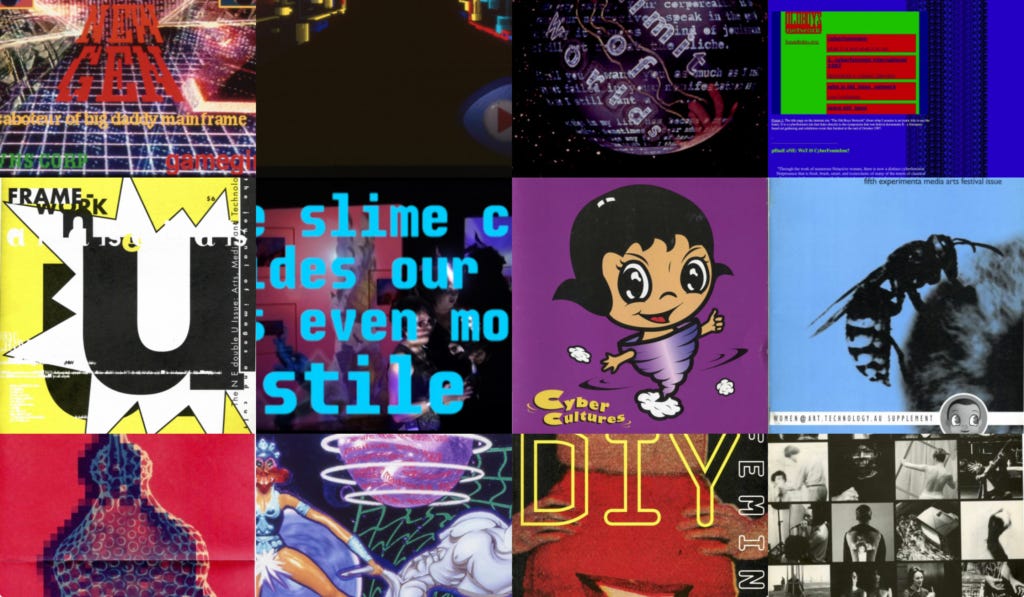
Cyberspace being feminine comes from Sadie Plant’s work in the 90s. She talks about how digital technologies have a deep affinity with femininity because they share similar characteristics. She talks about how the internet has female ways of thinking and being, referring to ideas around cyberspace and women being networked, non-linear, and concerned with making connections. She argues that women are naturally suited to internet technologies because they both emerge from within a male culture, women and technologies are producers and reproducers of cultures. Her argument also rests on the idea of the feminisation of technology. Feminists have long critiqued technology as constituting masculine patriarchal culture, and an arena in which women are systematically excluded. Digital technologies then offer a radical departure from masculinised ways of knowing. Further, the Australian artist group VNS Matrix created their ‘Cyberfeminist Manifesto for the 21st Century’ in 1991 and wrote their famous line “The clitoris is a direct line to the matrix” – they make direct links between the female body and the internet (the matrix), and place female anatomy as the entry point to cyberspace.
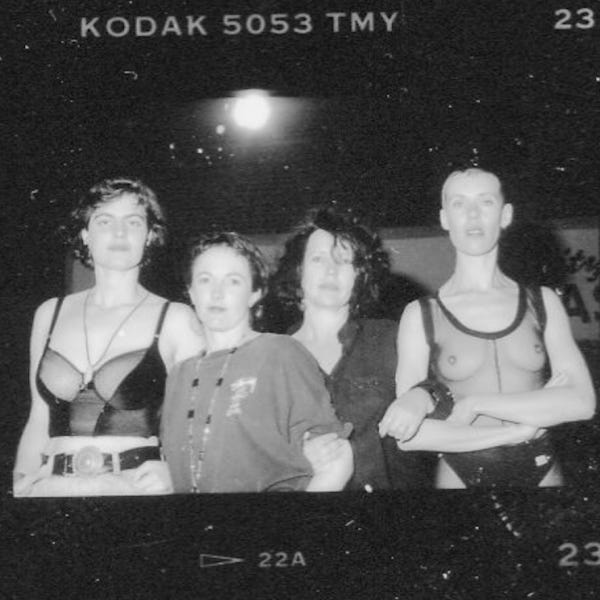
It also points to sexuality and pleasure in the politics of boundary crossing. So, cyberspace being feminine is really a nod to a broader feminist politics that rest on transgression. It’s about appropriating a culture of technology for women’s liberation and recontextualising technologies. These approaches have been criticised for their essentialism and biological determinism, and I think these critiques are very important. Cyberfeminists are also critiqued for their utopian vision, but I think an engagement with the notion of utopia and a recontextualization of cyberfeminism can be useful for feminist thinking, and that’s what I do in the Barbie article.
How effective is feminism in the modern day and how does it look like?
We really need feminism now. There’s an argument that we are in the ‘fourth wave’ of feminism which is closely linked to the digital sphere, social media, and focused on intersectionality. Digital activism is prominent, we’ve seen movements such as #MeToo and #TimesUp which have been hugely effective in exposing harassment, violence, and misogyny on a global scale. There’s also lots of feminist rhetoric across social media in response to the rise of the manosphere and wider alt-right discourse. For example, there are lots of podcasts focusing on men’s rights which heavily critique feminism, and there are feminist content creators who challenge these ideas. Social media spaces, according to a fourth wave feminism logic, are spaces where activism can be practiced on an international scale and organised globally through networks. I think the landscape is more complex than this. Feminist activism is absolutely happening online, but we also see the rise of tradwives and the commercialisation of feminism with the #girlboss in these same spaces. We can think about this through the concept of postfeminism, where ideas of women’s empowerment, confidence, and liberation suggest that feminism has been done and is no longer needed. It’s wrapped up with capitalism and commercialisation and does the ironic work of reproducing normative ideals through a lens of choice. Feminism is complex and complicated and is further complicated with how our lives are mediated through technology now. Laura Bates’s new book The new age of sexism: how the AI revolution is reinventing misogyny is terrifying and is an excellent demonstration of why feminism is so necessary in a digital age. This being said, feminism remains effective. Feminism gives us a language to critique and make sense of the contemporary world, and it offers us a framework for navigating the landscape.
In the last recent years, has the label “feminist” dropped in popularity?
Anecdotally, yes, I think that there’s a reluctance to self-label as feminist. I am surrounded by feminism everyday so my world is feminist but I am very aware that outside of that, feminism isn’t always valued. There are still stereotypes around what it means to be a feminist, or what a feminist looks like, and there’s a wider backlash against feminism like we see with things like the manosphere. I can see why it’s not appealing to label yourself a feminist, but it’s important to keep persisting with feminism. I try to be visible with my feminism and I try to live by feminist principles. I talk about feminism a lot with students and always have such interesting conversations with them about why feminism might not be popular. Hopefully by engaging with feminism more and seeing how feminism can critique harmful social structures and give meaning to identities and experiences, labelling yourself a feminist can be less daunting.
How important are identity labels for society? Does the society have a natural need for categorisation or do labels help to keep an order in society?
Identity labels can give meaning, community, and a sense of belonging; I recognise that these are important. Identity labels also shape our experiences, and we navigate the world through our multiple identities. They signify our understandings of who we are in relation to others and provide the grounding for our standpoint on how we view and conceptualise society. However, these labels are not natural or neutral. Identities are key organisers of institutions and practices within society and culture and power is central. From a social constructionist perspective our identities are not predetermined or fixed within the body, but they are constituted socially. Gender identity, for example, is a social construction with a basis in an unequal relation of power where one group has power and privilege over another within society. It structures society through patriarchy and that shapes our experiences as well as the structure of society. The naturalisation of gender as an essential identity based within the biology of the body works to justify this hierarchy and maintain social order and patriarchy. It that sense it’s bout maintaining order in society because there’s an inherent power relation central to the construction.
More postmodern approaches like Butler’s notion of performativity suggest that gender is something that is continuously produced through our interactions and social practices. Again the label of gender is fluid, it is something that we do rather than something that we are. These repeated performances of gender are based in social norms, so performativity is shaped by power, we don’t choose to ‘perform’ these identities freely. This approach helps us to understand how a social order is maintained because a social order depends on the perceived notion of stability, and repeated acts which are embodied and appear natural uphold this perception of stability. This helps to uphold the binary logic which supports broader hierarchies such as patriarchy.
This is not to say that labels or identities more broadly are not meaningful. Rather, it is about recognising how power shapes these identities to maintain a social order. When we can think about things like transgression or blurring boundaries, or revealing the fallacy of the constructions, then power can be reconfigured.
Are any forms of art labelled “feminist” likely to attract more audiences or deter them?
It’s a really interesting question. In recent years there has been a resurgence in attention given to feminist art with a variety of exhibitions being curated across the US and Europe engaging with the legacy of the feminist art movement. I enjoyed visiting the Baltic centre for contemporary art to see the first major UK survey of Judy Chicago’s work in 2020 and the exhibition If Not Now, When? Generations of Women in Sculpture in Britain 1960-2022 at The Hepworth Wakefield in 2023, for example. So, there is some institutional interest in feminist art in this sense.
However, in my PhD research in which I interviewed digital feminist artists about their practices and experiences of being a feminist artist they talked about the challenges of labelling their work as feminist. They discussed how, particularly within the digital contexts in which they produced and exhibited their work, the tag of feminism both allowed them to cultivate an audience but also attracted negative attention. Some of the women outlined how aligning their work with feminism meant that they were taken less seriously, and some received abusive or threatening comments from their online audiences. Some discussed how their work was censored on platforms like Instagram because they were explicitly feminist and explored themes around bodies and menstruation. My research demonstrated that there is a tension with how feminist artists practice feminism and this had a lot to do with the relationship between digital platforms, online audiences, and the concepts that they worked with.
Beyond that I think it’s interesting to see the growth of popularity and visibility of women artists, but I am cautious of labelling this as feminist simply because artists are women. For example, Hip hop and rap music were generally male dominated genres but the 2010s saw an emergence of prominent women rappers who have shifted the genre. Men have historically been the primary consumers of the genre but there are more women listeners now. I have read about how the gender gap in rap and hip-hop consumption is closing and this is interesting in terms of the visibility of prominent women figures in that space.
To what extent does globalization influence music, and does it lead more to cultural exchange or to cultural homogenization?
Globalisation has absolutely influenced and shaped music, its production, dissemination, and reception. Technologies are central to this. There’s definitely opportunity for cultural exchange in terms of the emerging visibility and blending of different genres which is important, but there’s a need to think about the broader contexts of globalisation. Local music cultures become increasingly compressed and standardised through globalisation, and dominant ideologies shape what is deemed to be valuable in a global market. Success for artists within the industry is determined by Western standards and algorithms can reinforce dominant narratives and ideologies. So this limits some of the potentials of authentic cultural exchange and leans towards greater cultural homogenisation. However, it’s also important to think about how consumers are interpreting and understanding music to make meaning.
As an academic and especially a lecturer, how important is music and all other forms of art in your everyday life?
Art is so important to me in my everyday life. I like to go and see art as much as possible, I love seeing plays, and I read a lot; I love having stacks of magazines and books everywhere and I’m always trying to learn about things like design or architecture. I get lots of inspiration for my teaching this way and I like to incorporate art into teaching as much as possible. It helps to make sense of some of the theories and concepts that we discuss in the modules. For example, I have organised two trips to visit different art galleries for my Gender, Sexuality, and Media module. Going to those spaces and seeing different types of art helps to develop an understanding of things like representation and the male gaze. Music is also a really useful pedagogical tool to use in the classroom as a way of engaging with reflection and encouraging active participation. Analysing song lyrics can help to illustrate and understand sociological concepts.
The disappearance of which art form would be more likely to cause chaos in society: Literature, Art, Music, or Film?
All of them, which I appreciate is not a very good answer. We rely on language for everything as it means we have shared codes of understanding and meaning making. If literature disappeared we would lose the language to understand the world, all notions of history, law, politics, education, all are structured through language so shared meanings and ways of knowing would collapse and that would cause chaos in many forms. Storytelling is also so important to how we conceptualise society and our identities, cultural imaginations, interpretations. Visual arts disappearing would mean a loss of symbols and representations of meanings. It would signal a significant fracture for culture. There’s the structural chaos that would be caused in terms of the institutional function of arts and culture, the disappearance of art would collapse the art market for example and that would cause economic chaos. And there’s also constructs that govern, uphold, or challenge social norms and values. Things like tradition, ritual, morality are all mediated through arts. Subjective and emotional experiences are also made sense of through arts. A world without arts would cause chaos in many aspects of the word.
How politicised is popular culture currently?
Popular culture is highly politicised, popular culture shapes and reflects wider norms and ideologies so its central to the reproduction but also a challenge to wider political ideas. Popular culture is also a site of political critique.
Some of my recent research explores this in the context of gender ideology and reality television. I analysed The Real Housewives of New York City to explore gender and the construction of the housewife. I analysed through the lens of Jack Halberstam’s The Queer Art of Failure to look at how the figure of the housewife is constructed and subverted on the show through multiple overt failings of femininity. Halberstam’s perspective on failure is that failure is political as it offers a way out of binary trappings of normativity. Failure is not just the opposite of success in this way of thinking, rather it critiques the foundations of success itself. Failure is about harnessing the subversive potential for resisting hegemonic structures. When looking at The Real Housewives, the show creates a spectacle of femininity. It simultaneously upholds normative feminine values whilst using humour to highlight the failings of femininity from the women on the show. For example, housewives across the franchise place emphasis on their role as mothers, but the show makes visible their questionable parenting choices and often shows the women outsourcing motherhood to a host of nannies. Whilst The Real Housewives is seen broadly as low popular culture, it does the work of grappling with broader political tensions. Trump had announced his running for the 2024 presidential election when season 14 of The Real Housewives of New York City aired in 2023 and family values, which hinge on the naturalisation of gender roles, are central to his conservative campaign. The housewife is a pivotal figure here as she embodies these politics and reproduces ideas of naturalised gender hierarchy in the private sphere. When we see normativity reproduced on social media with the emergence of the trad wife, the failures of The Real Housewives signify a challenge to this naturalised gender order. Their failings of femininity (framed through irony) show us that femininity is not natural, that subservience and a desire for motherhood are not innate biological realities, but they are constructions that uphold patriarchy. In this context popular culture is a highly politicised arena as it is where political tensions around gender are negotiated.
Besides political and artistic preferences, what is something that always changes in society over years?
I think lots of things are circular, I think to fashion and how different styles come back around. All of our practices around the body are changing constantly, the way we dress, use makeup, body modifications, ideas around beauty standards. Again, all of these practices that are now framed as trends have a relationship to wider politics, they are negotiations of norms and values. Our use of technologies is also probably something that is always changing as well, and this will shape our tastes and preferences with regards to things like politics and art. Social media comes with that and the cycle of different platforms. I’m thinking back to Laura Bate’s new book about the wave of popular AI tools that have worrying consequences, that’s going to be something that is always changing in terms of how it is adopted and used within different aspects of our everyday lives and therefore impacting society.
As a lecturer, what is the most challenging thing about your job?
From my experience the main challenge is juggling all the different parts of the role. In a given week there’s teaching, research, administrative tasks, meetings, events, office hours etc. It can be really easy to pour all of your time and effort into one thing, so it’s important to plan out time and space to make sure you can stay on top of everything. Each of the different aspects of the role offer their own little challenges but they are all enjoyable in many ways.
If you could meet anyone dead or alive, who would it be?
Louise Bourgeois and Judy Chicago, I love all of their work, or any of the Real Housewives!!
There’s s a life principle that “You need to try everything because you only live once”. Are there things that you will never do or try? Is there anything you would lack courage to do?
I’d like to think I would be brave enough to try anything, but I am very happy in my comfort zone!
What is a song you would never ever want to hear again?
Pompeii by Bastille was the soundtrack to some of my least fine moments which I would be grateful not to be reminded of. Also Cheerleader by OMI.
Just like music, reading daily exercises the brain, improves sleep and reduces stress, so why not read some more?! Check this out:
CALL FOR PAPERS: GRUNGE INCLUDED CONFERENCE 2026

Inviting music writers, scholars, students, researchers, musicians, critics, and cultural commentators to submit abstracts for presentations!
Sound Advice: 6 Tracks Where Artists Drop Life Lessons Right in Your Ears

Hypnotize - Audioslave (2002)